


AI vs Human Telemarketing: Finding the Right Balance in B2B Sales

If you’ve attended a sales or marketing conference recently, chances are you’ve heard someone predict the end of telemarketing. AI voice agents, automated sales assistants and intelligent CRM platforms are dominating the conversation. But is traditional B2B telemarketing really under threat, or is something more interesting happening? It seems like every day there’s another announcement about AI-powered customer service, automated sales assistants or software that promises to replace repetitive business tasks. So it really is no surprise then that many companies are beginning to ask whether telemarketing is genuinaly going to be next.
Can AI really replace experienced telemarketers? Will voice agents eventually make outbound sales calls without human involvement? Or is the future likely to involve people and technology working together?
The honest answer is probably somewhere in the middle.
While AI is already changing the way businesses identify and qualify sales opportunities, successful B2B telemarketing has always been about much more than simply making phone calls. It’s about understanding people, recognising opportunities and building trust – qualities that remain surprisingly difficult to automate. According to Salesforce’s latest State of Sales report, sales teams continue to invest heavily in AI, but relationship-building remains one of the most valued skills among high-performing sales professionals.
For businesses looking to generate high-quality leads in 2026, the smartest approach isn’t choosing between AI and human telemarketing. It’s understanding where each delivers the greatest value.
AI Is Already Transforming Sales – Just Not in the Way Many People Think
When people hear “AI telemarketing”, they often imagine a robotic voice making hundreds of calls every hour.
The reality is rather different.
In fact, many businesses are already using AI every day without even thinking about it. Modern CRM platforms automatically prioritise leads, recommend follow-up actions and analyse customer behaviour. Marketing platforms score prospects based on their engagement, while data tools identify companies that closely match an ideal customer profile.
These systems don’t replace salespeople.
Instead, they remove much of the repetitive work that has traditionally slowed sales teams down.
Imagine asking a salesperson to manually review 15,000 company records before starting an outbound campaign. It could take days to identify which businesses are worth contacting.
AI can complete that task in minutes.
It can analyse company size, sector, previous interactions and buying signals before producing a much shorter list of prospects that genuinely deserve attention.
That isn’t replacing telemarketing.
It’s making telemarketing significantly more efficient. One thing we’ve noticed over the past year is that businesses aren’t asking us to make fewer calls because of AI. If anything, they’re asking us to make better calls. AI is helping improve prospect data and campaign planning, but clients still want experienced people having conversations on their behalf.
The Human Skills That Technology Still Can’t Replicate
Despite the rapid progress of artificial intelligence, there’s one thing technology still struggles with.
People.
Successful B2B conversations are rarely predictable. Prospects ask unexpected questions. They raise concerns that weren’t anticipated. They mention business challenges that weren’t included in the original brief. Experienced telemarketers rarely follow a script word for word. They listen carefully, pick up on hesitation, recognise when a prospect is genuinely interested and know when it’s better to ask another question than push for an immediate appointment.
Sometimes they spend ten minutes discussing an issue that wasn’t even part of the original sales conversation because that’s what builds trust.
A facilities manager might initially reject a conversation because budgets have already been allocated.
An experienced caller recognises that as an opportunity to ask about the following financial year.
A voice bot simply moves to the next scripted response.
Those subtle moments often determine whether an appointment is secured or the opportunity disappears.
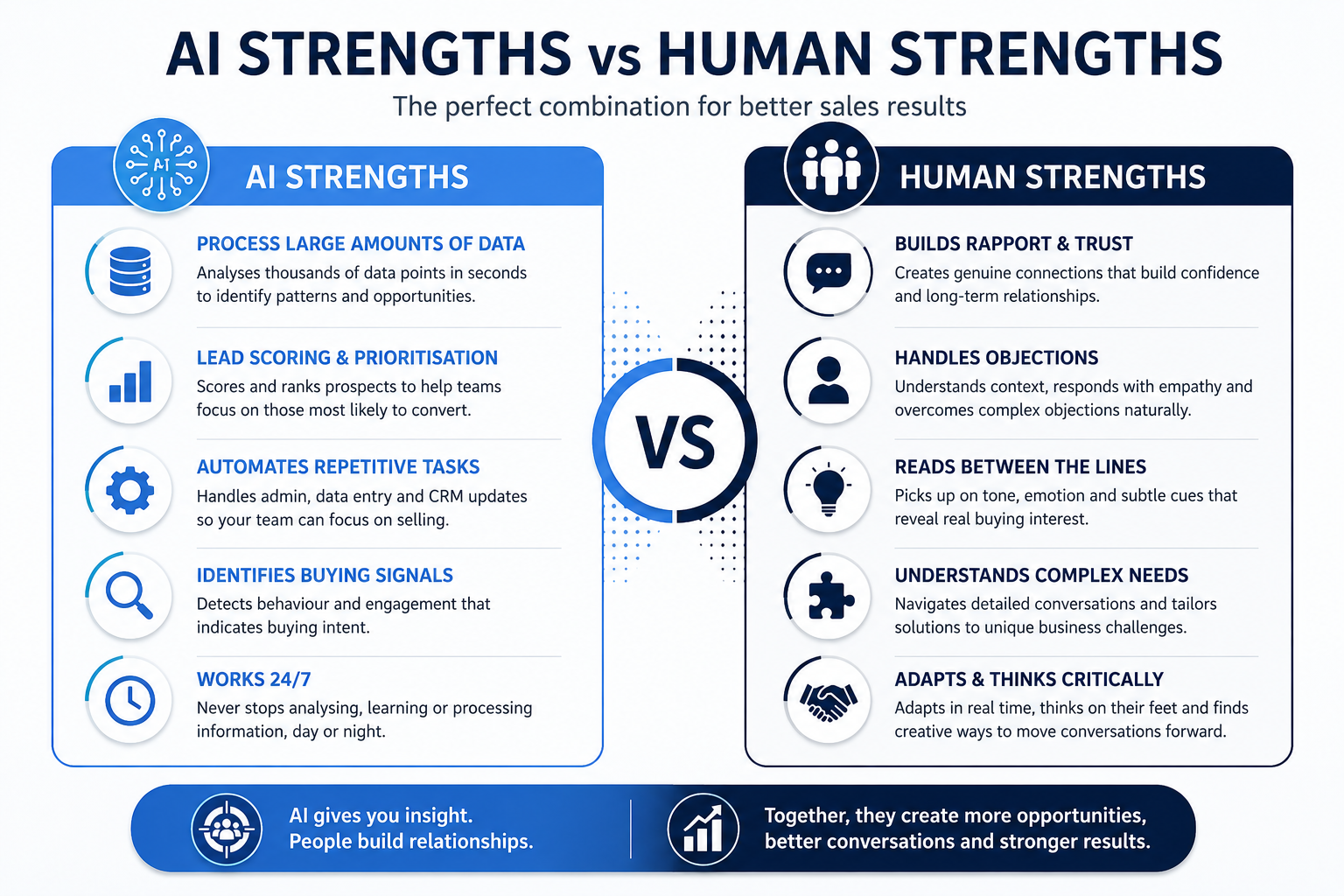
It’s Not About Replacing People – It’s About Giving Them Better Tools
One mistake many businesses make is thinking they have to choose between AI and traditional telemarketing.
In reality, the most successful organisations are combining the strengths of both.
Think of AI as an exceptionally organised assistant.
It never gets tired.
It never forgets to update the CRM.
It can process huge amounts of information in seconds.
But when a prospect says, “We’ve been disappointed by suppliers before…” or “We’re actually reviewing our current contract next quarter…”, that’s where experience matters.
A skilled telemarketer knows whether to probe further, change direction or simply arrange another conversation at the right time.
Technology helps identify opportunities.
People convert them into relationships.
A Real-World Example
Imagine a Midlands-based engineering company looking to win more facilities management contracts across the UK.
The business has access to thousands of potential prospects.
Rather than asking the sales team to work through a huge spreadsheet, AI identifies companies that match the ideal customer profile, have recently expanded, recruited maintenance staff or shown interest in related products online.
By Monday morning, the telemarketing team isn’t calling random businesses.
They’re speaking with organisations that are far more likely to have a genuine requirement.
The result?
- Fewer wasted calls.
- Better conversations.
- Higher-quality appointments.
The technology hasn’t replaced the telemarketing team.
It’s simply allowed them to spend more time doing what they do best.
The Rise of Hybrid Sales Teams
Across many industries, we’re seeing sales teams evolve rather than disappear.
Routine administration is becoming automated.
Prospect research is becoming faster.
Data is becoming cleaner.
Sales professionals are spending less time searching for leads and more time having meaningful conversations.
That shift benefits everyone.
Businesses improve productivity.
Prospects receive more relevant calls.
Sales teams spend more time selling.
It’s difficult to see that changing any time soon.
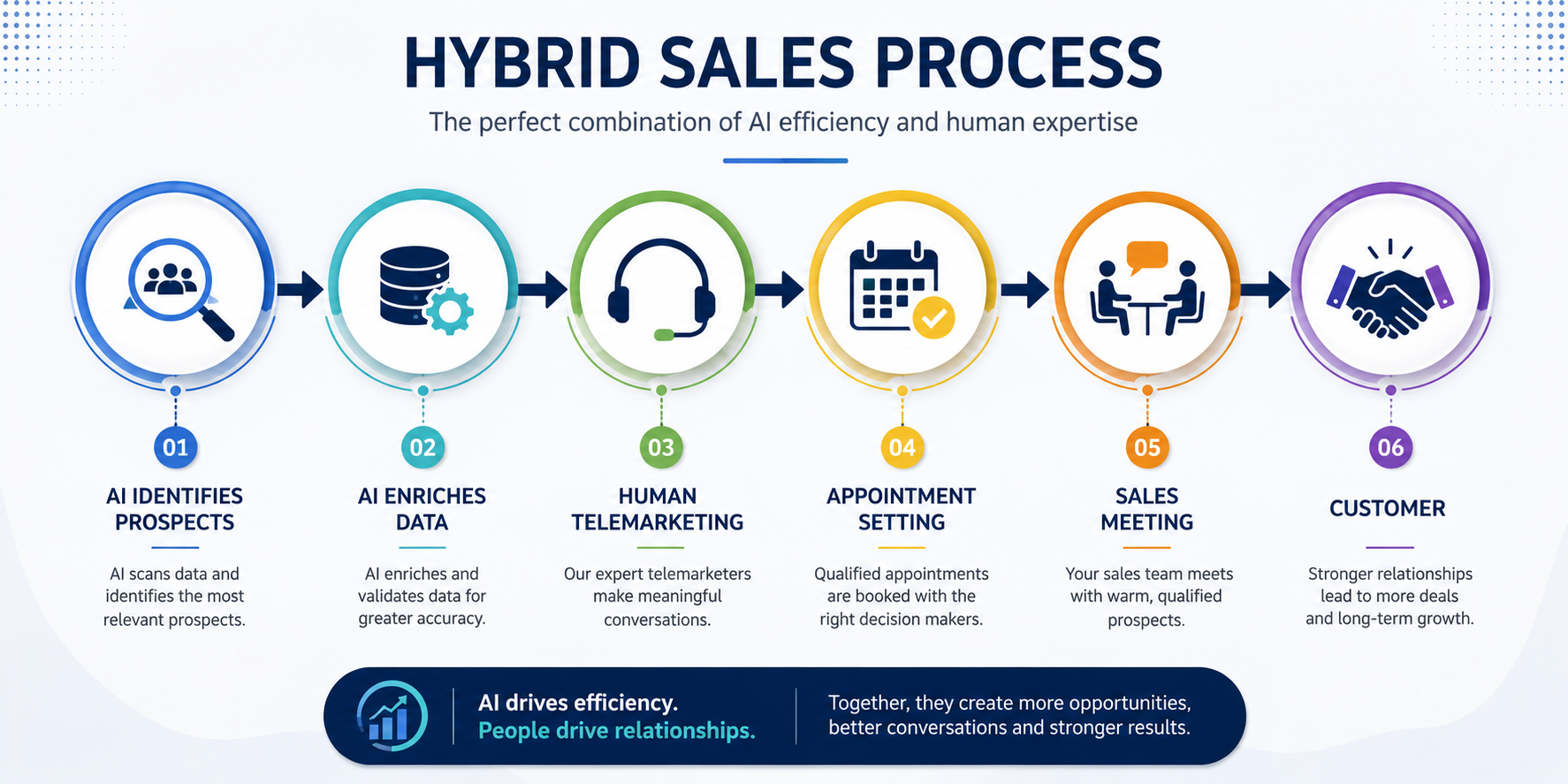
So What Should Businesses Be Doing?
Rather than asking whether AI will replace telemarketing, businesses should be asking a more practical question.
How can AI make our telemarketing more effective?
For many organisations, that might involve using AI to improve prospect databases, automate administration or identify buying signals before making contact.
Experienced telemarketers can then focus on the part of the sales process that technology still struggles to replicate – building trust, understanding business challenges and creating genuine opportunities.
That’s why many organisations continue to invest in professional lead generation and appointment setting services while also embracing AI-powered sales tools.
The two aren’t competing.
They’re becoming increasingly complementary.
Looking Ahead
Artificial intelligence will continue to reshape the way businesses sell.
There’s little doubt about that.
We’ll see smarter CRM systems, better prospect data, more sophisticated automation and increasingly capable voice technology.
But successful B2B sales have never been built on technology alone.
They’re built on conversations.
On understanding challenges.
On recognising opportunities.
And ultimately, on earning trust.
The businesses that thrive over the next few years won’t be those trying to replace people with AI.
They’ll be the ones using AI to make their people even better.


